There are 40+ new AI products launching on Product Hunt every single day. Your potential users have 100+ apps installed on their phones.
Their attention span for trying something new is about 90 seconds.
The market is oversaturated.
Paid acquisition costs climbed 60% over the last five years while conversion rates dropped 25%.
The old playbook (rank on Google, buy ads, pray) doesn’t work anymore because everyone is running it and nobody’s attention lasts long enough to care.
But some companies are still hitting 5,000 users in six months without burning their runway.
👋 Hey, I’m Suhas, and welcome to this week’s edition of the TPF Weekly!
1. Viral referral loops
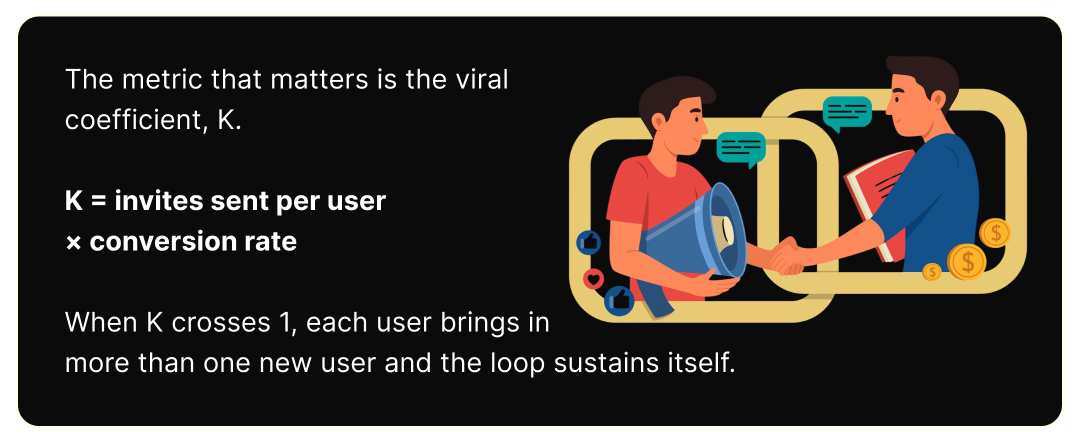
Referral programs have been in every growth playbook for 15 years and they keep showing up because the underlying math is hard to argue with.
Either way, you want this running from day one because it works in the background while you are focused on everything else.
What makes it work
Double-sided incentives are non-negotiable. Both the person inviting and the person joining need to get something they actually want, not a discount code.
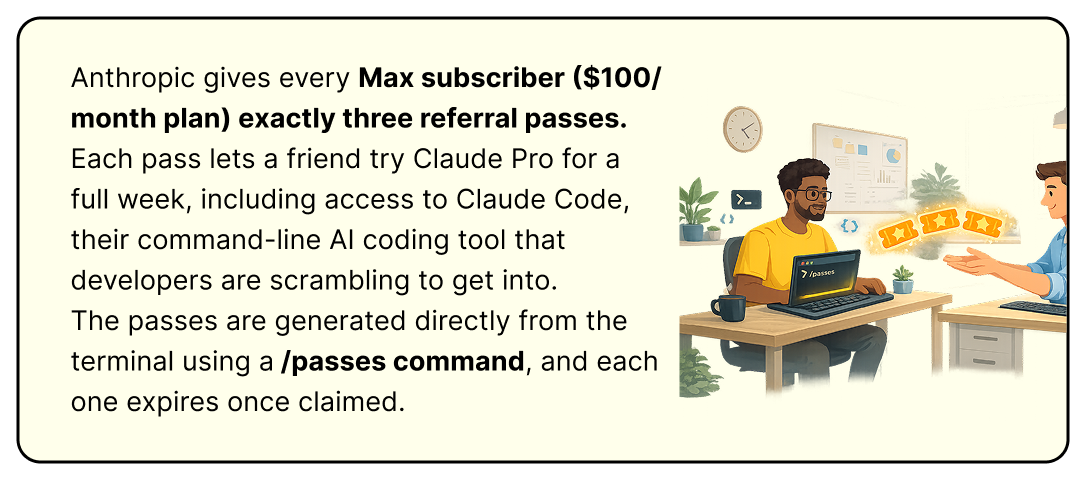
Claude’s Guest Pass program is an example of this done right.
Three passes. That’s it. No unlimited referral links, no spray-and-pray distribution.
The scarcity is real, which means every share feels like a genuine recommendation rather than a marketing blast.
Max subscribers were posting their links on X, Reddit, Discord servers, and Hacker News, and passes were getting claimed within minutes. The recipient gets full Pro access to tools they genuinely want. The referrer gets to be the person who gave them that access. Both sides win.
This is the bread and butter strategy. It works if not immediately, then eventually.
More than two clicks to share and drop-off becomes significant.
One-sided rewards, where only the referrer benefits, make the invite feel like a cold pitch rather than a genuine recommendation.
2. Founder-led social
The other three strategies have ceilings.
Referral loops stabilise once growth slows. Creator networks scale with budget. AI UGC will evolve as regulation catches up. Founder-led social is the one that keeps compounding regardless.
When a founder documents what they are actually building, the real numbers, the decisions that did not work, audiences start feeling invested before the product is even in their hands.
WisprFlow is the sharpest example of this.
Tanay Kothari had been documenting the build publicly long before launch, sharing metrics, mistakes, and technical decisions openly as they happened.
By the time the Product Hunt launch came, the trust was already in place.
The launch video had zero production budget, just Tanay and his brother with an iPhone and a ring light, and it hit number one on Product Hunt and reached millions of views.
The VC community started distributing the product themselves because they were already daily users.
One investor telling a hundred portfolio companies drove 125 enterprise users a week and 90% organic month-on-month growth during launch, almost entirely through word of mouth.
The play
Post daily as a founder, share actual numbers and real failures, and show what users are building with your product rather than what the product does in isolation. It is the only strategy in this list that does not plateau.
3. Community-led growth
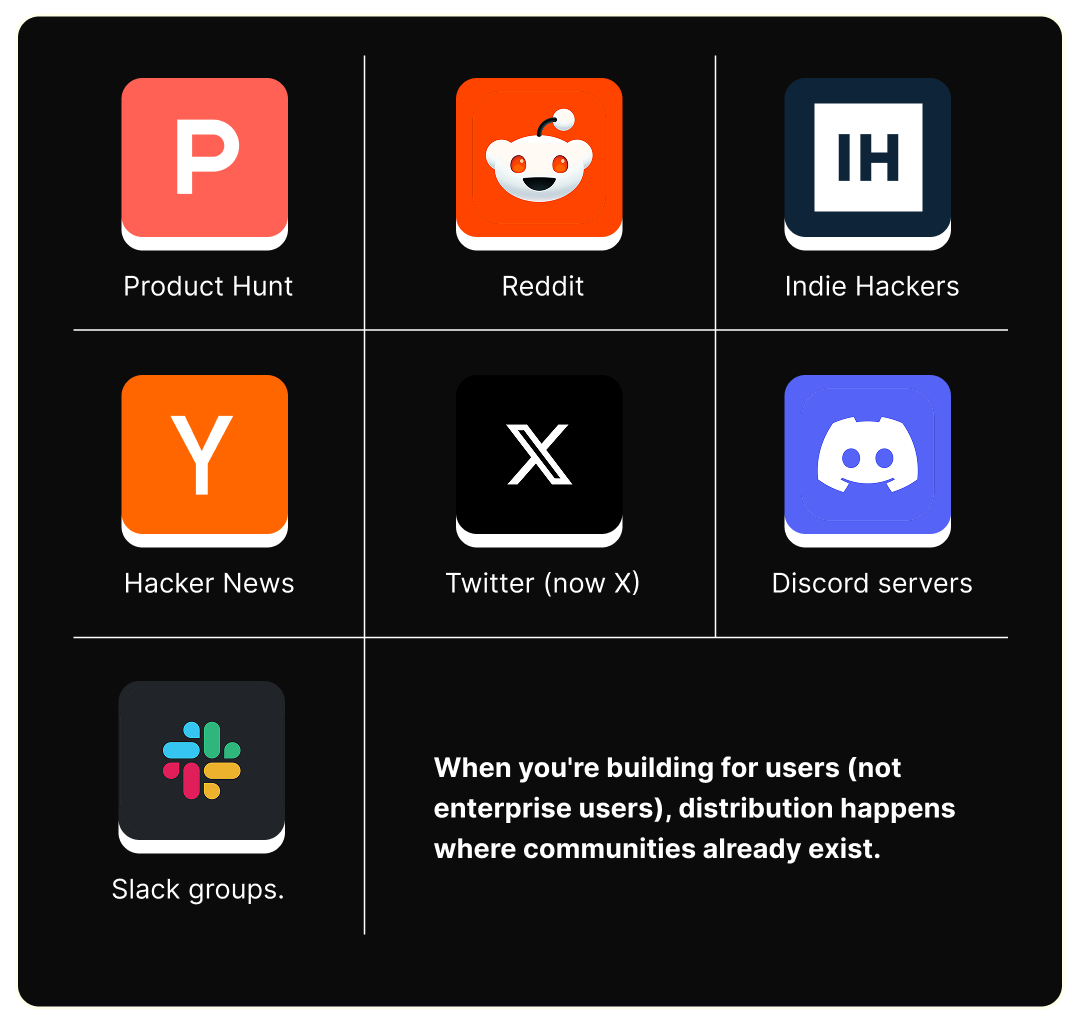
These are places where your early users already hang out, already trust each other, and already share things they find useful.
The mistake most founders make? They treat these like ad platforms. Drop a link. Ask for upvotes and disappear.
So what works? Identify 5-10 communities where your ideal users spend time. Join them. Not to pitch. To participate.
Answer questions. Share what you’re learning. Be helpful without expecting anything back.
When you launch, those communities will care because they know you. You’re not a random stranger dropping a link. You’re someone who’s been genuinely helpful.
Cross-platform distribution happens naturally here.
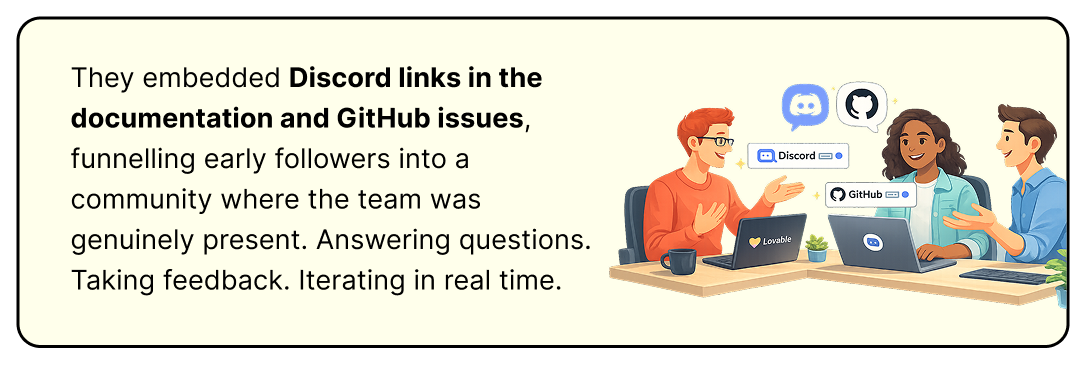
Lovable (formerly GPT-Engineer) is a textbook case.
Before they had a commercial product, the team open-sourced their AI code generation tool on GitHub. It became one of the fastest-growing repos ever, picking up 52,000+ stars almost overnight.
By the time they launched the paid product in late 2024, they had a 27,000-person waitlist built entirely from community goodwill. No paid acquisition, all organic.
Users became their distribution channel, proudly sharing apps they built with Lovable across X, Reddit, and dev forums.
The result: $17M ARR in three months. $100M ARR in eight months. With a team of just 15 people.
Their founder has said it plainly: “Users became our voluntary salesforce.”
4. AI-built influencers
This is the newest channel on this list, and most founders have not figured out how to use it yet.
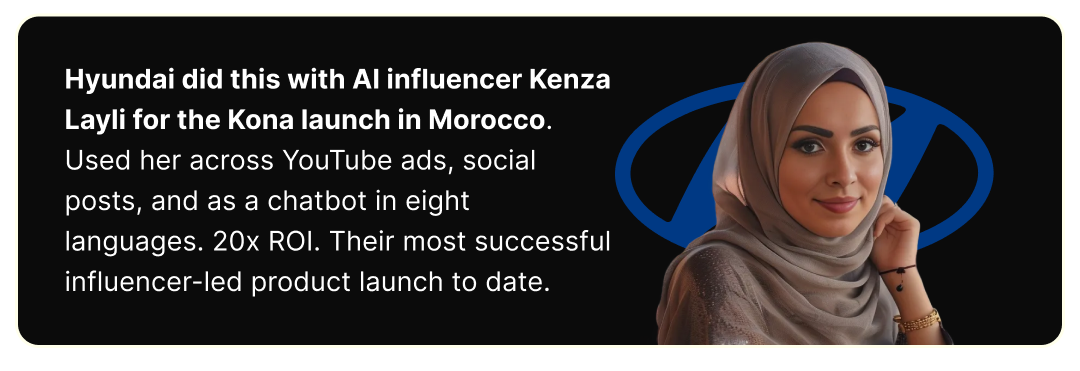
Until late 2025, virtual influencers were expensive CGI characters only large brands could afford. Then video generation models got good enough that the economics flipped.
The play: build your own influencer from scratch. Create a virtual persona that fits your brand and audience. Deploy across TikTok, Reels, Shorts, and Instagram simultaneously. One character, twenty variations, live the same day.
58% of US adults now follow at least one virtual influencer. Among followers aged 18-34, 40% say one has directly influenced a purchase.
The mix that works
70% AI for volume and testing, 30% real creators for moments that need human emotion. AI handles scale. Humans handle trust.
The catch
Label your AI content. The EU AI Act is live, the FTC is watching, and platforms are building detection tools. What kills trust isn’t the label. It’s getting caught pretending a virtual character is real.
If I were starting from zero today
I would not pick one of these and go deep. I would get all four moving at the same time.
Set everything up before you have users
Get the referral loop live before launch
Find 20 to 30 creators in your niche and send them the product with no pitch attached
Start posting daily as a founder
Run ten AI influencer variations across TikTok, Reels, and Shorts
Double down on what is pulling
Around 500 users, something will be working harder than the rest. Put more behind that and pull back from what is not moving. Do not cut founder content or creator relationships because they feel slow. That is almost always the phase right before they compound.
Let it run
Past 2,000 users, referrals start generating signups on their own. Creators who genuinely liked the product start showing up in your CPA numbers. Founder content starts reaching people outside your existing network.
At that point your only job is recognising what is pulling hardest and putting more behind it.