
Surviving AI
two specific abilities that are simple but not easy

👋 Hey, I’m Suhas, and welcome to another edition of TPF Weekly!
Quick question before we get into it:

This post earlier this week made me sit down and write today’s edition.
At first, the tweet reads like good news, and it largely is.
The work PMs have been doing for years is finally getting named as the thing that matters most.
The part I want to explore today is what “deciding what to build” involves once you take the rest of the work out of the picture.
AI tools, smaller teams, and engineers who no longer need translation are absorbing everything around the role.
What’s left is two specific abilities, as far as I can tell: Knowing how to ask the right question, and knowing what to make.
Both of these sound trivial until you try to articulate why someone who can do them is hard to replace.
The first one shows up in moments like this.
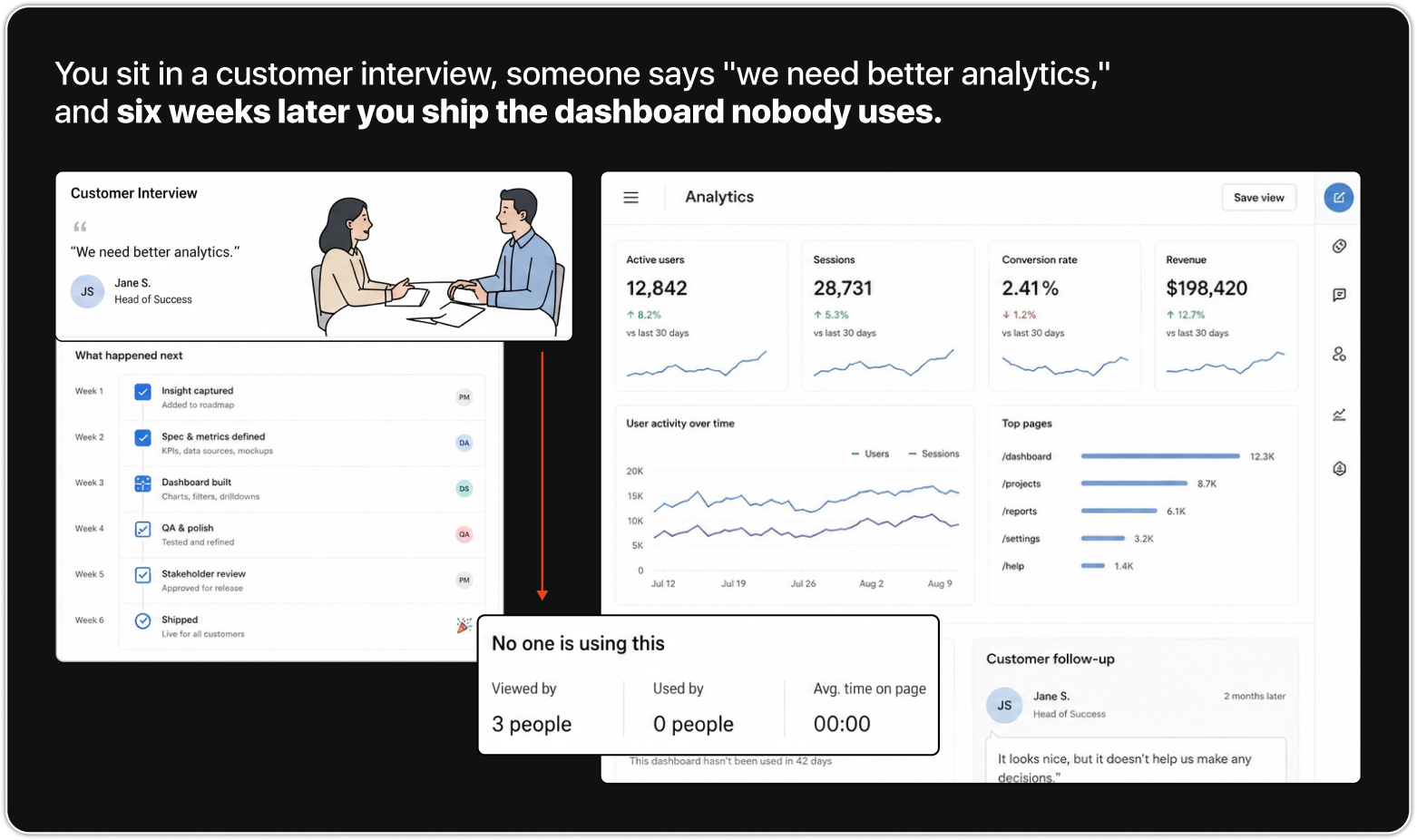
When you dig in, what they meant was that sales were losing deals because they couldn’t see what competitors had launched.
And the analytics ask was a clumsy proxy for a competitive intelligence problem you would have solved differently if you’d dug one layer deeper.
That gap, between the stated problem and the actual one, is where the muscle lives.
It’s also the gap AI doesn’t capture in training data, because the actual problem is almost never written down anywhere.
People write down the surface ask.
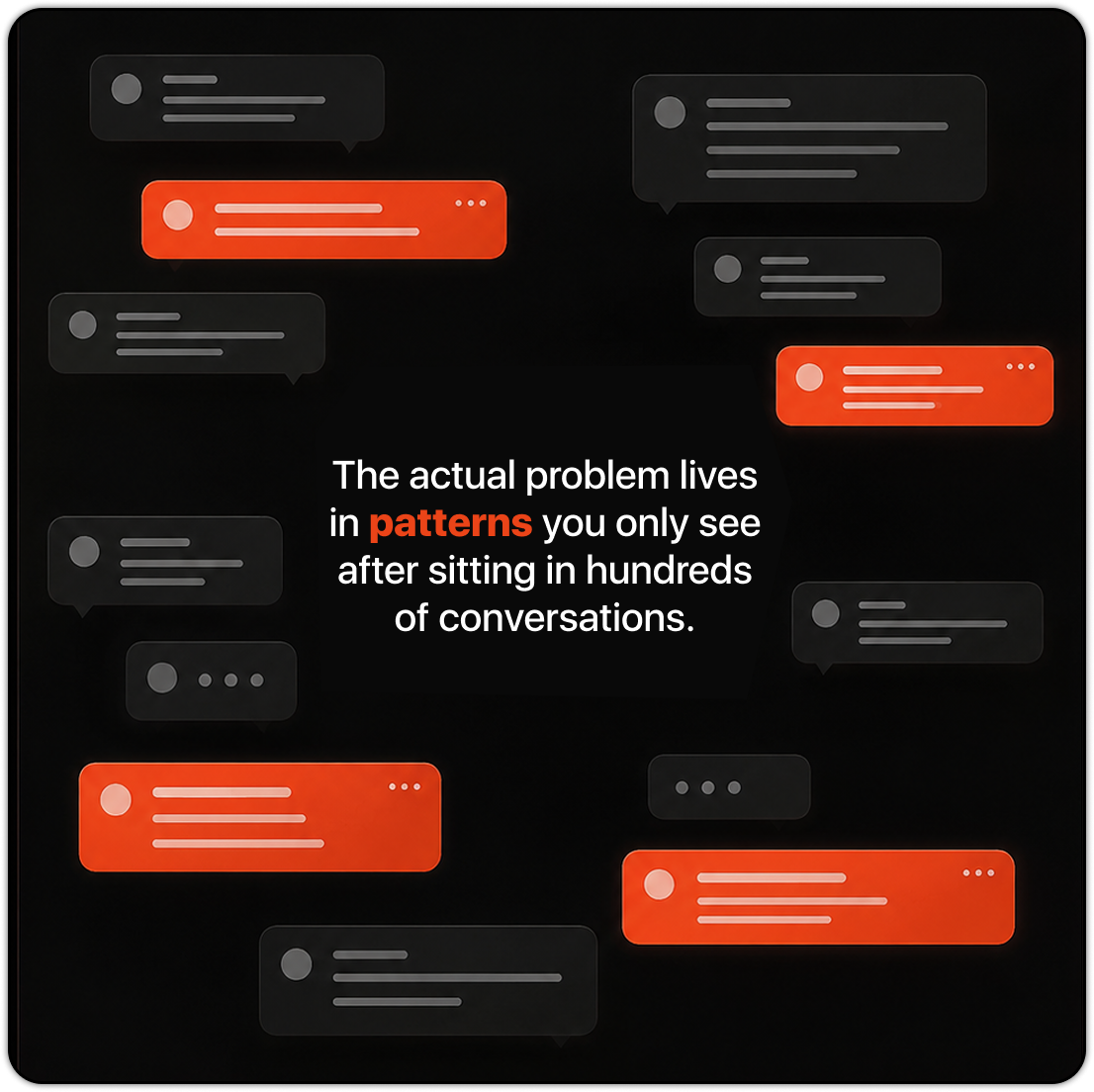
A senior PM has a model in their head that catches the gap automatically, and a junior PM, or a smart engineer who’s never done this work, doesn’t.
You can’t get the model from a workshop or a prompt.
It builds slowly over years, from being burned by surface asks until your first instinct stops being trustworthy.
Knowing what to make, the second muscle, is harder still.
It means holding the customer problem, business model, competitive landscape, your team’s capacity, and politics of three stakeholder groups in one head at the same time, while making a call about what should ship next quarter.
The decision is about which of many true things matters most right now, given everything else that’s true.
The right answer for a Series A startup is the wrong answer for a Series D company even when the surface problem looks identical, because the constraints around the problem are different.
Most product decisions aren’t between a good option and a bad one.
They’re between three good options that solve different problems for different segments, each of which would justify itself if you picked it.
The skill is knowing which of the three matches the moment your company is in.
You can’t outsource the call to a tool because the tool doesn’t have the context.
The context lives in your head, the call has to come from there, and you have to be willing to be publicly wrong about it for months before reality shows up to tell you whether you were right.
For how scarce those two muscles are, the market is paying for them.
The companies you’d most expect to make PMs obsolete are hiring them faster than anyone.
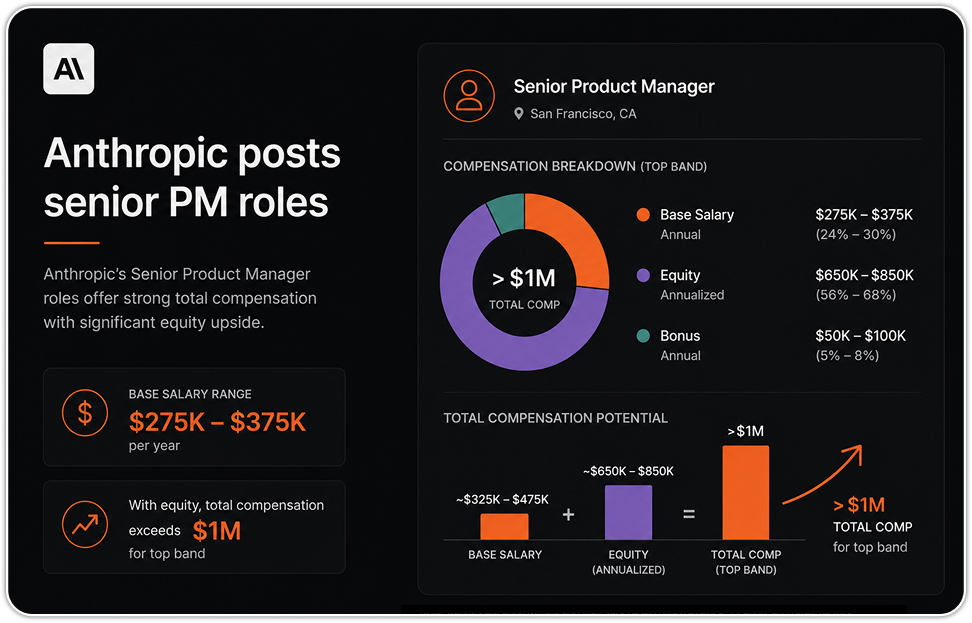
OpenAI, Google DeepMind, and Mistral are running similar hiring waves.
These are the labs building the AI tools that supposedly replace the role of PMs more than the rest of the market does, and they have access to the best engineers in the world.
Which raises the obvious question: the smartest engineers I know can now build anything, so why aren’t they stepping into the role?
Because engineers are exceptional at solving problems, and that’s a different muscle entirely.
A decade of senior engineering is a decade of taking a defined problem and finding the cleanest path through it, and the cognitive habit being trained is precision.
Question-asking gets built somewhere else, through customer conversations where what people say and what they mean don’t line up.
Knowing what to make comes from years of being the person who has to make the call and live with being publicly wrong.
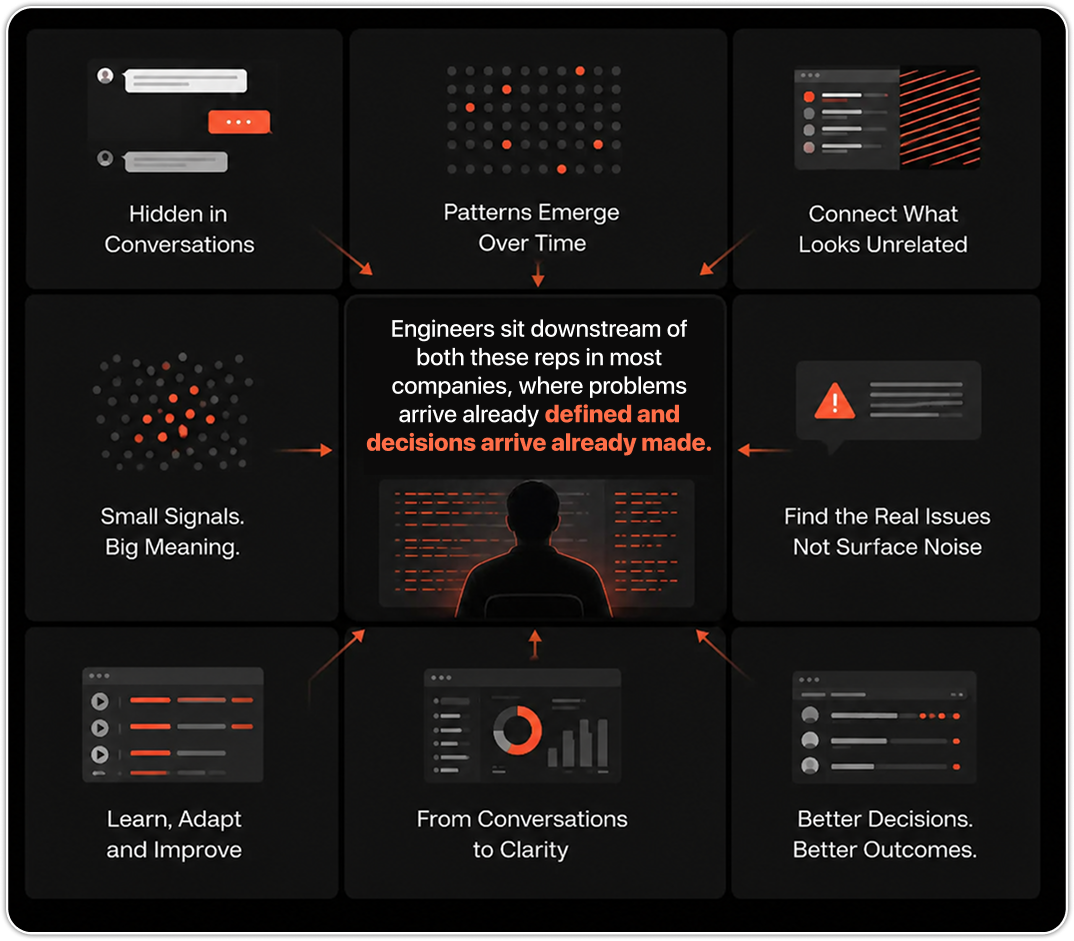
The ones who do develop both muscles typically go on to become founders, product engineers, or PMs, which is the same observation Andrew is making, just from the other direction.
If asking the right question and knowing what to make are now the only two things that matter, the PM role gets reduced to those two things and nothing else.
The role used to come with a lot of surrounding work: detailed PRDs, prioritization meetings, cross-team coordination, translation between engineering and business.
Most of that is being absorbed by AI tools, smaller autonomous teams, or engineers who no longer need the translation.
What’s left is the part that was supposed to be the core of the role and often wasn’t.
If your career was built on the surrounding work, it has been commoditized, and if it was built on the two muscles, the only thing you were ever supposed to be good at is now the only thing being measured.
So what do you do
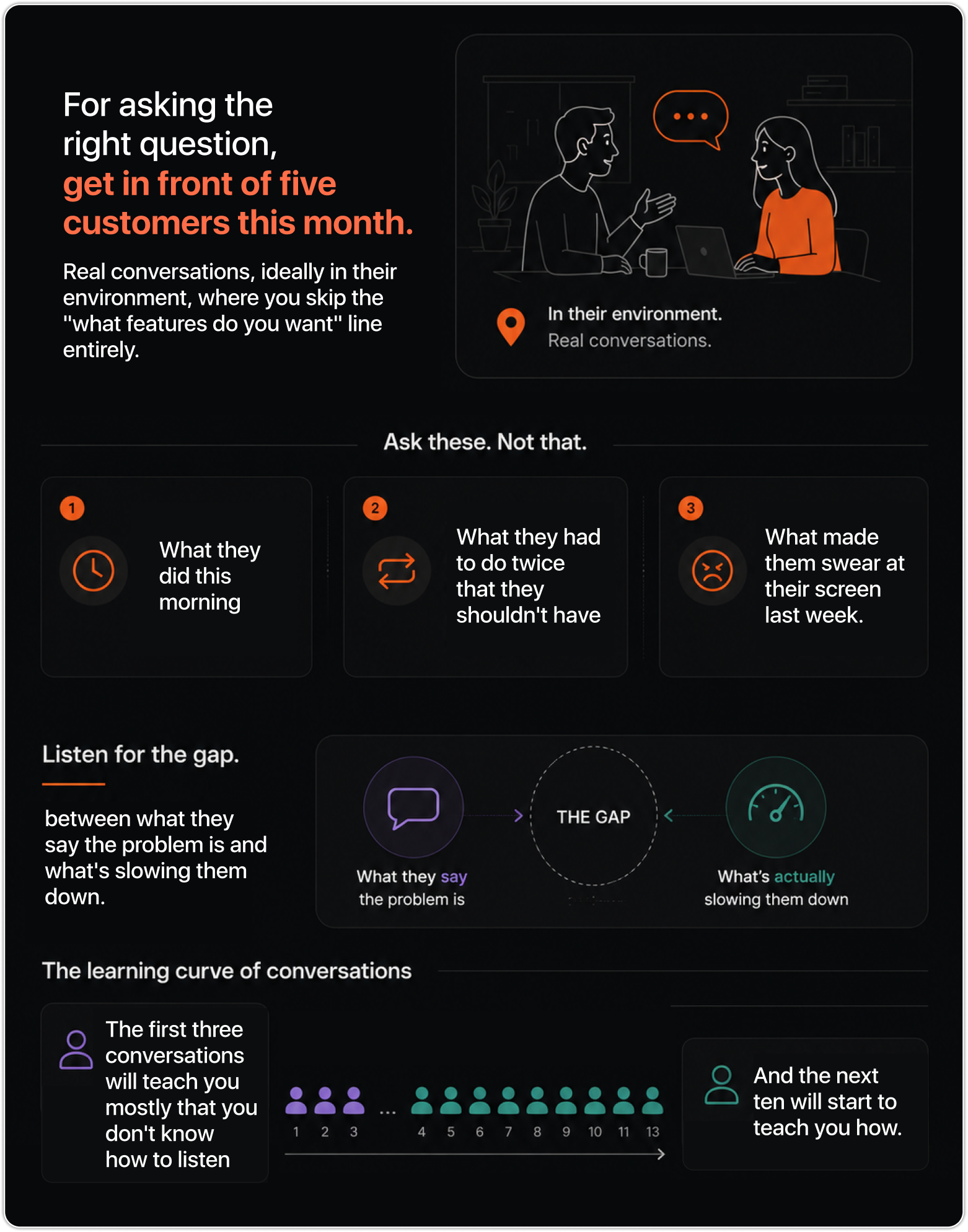
For knowing what to make, pick the next product call on your roadmap.
Before the meeting, write down what you’d build and why, in two sentences, and make the call alone.
Then go in and notice how much the consensus shifts your view, and the moments when the consensus is wrong and you go along anyway.
The skill is in the noticing.
These are slow muscles that take years to build.
The people already running these reps are getting better while everyone else is still deciding whether to start.
Pick a customer to talk to this week.
Upcoming Events
Serendipity - Leadership Dinner
May 21 | Mumbai
Register Here
Bits N Atoms | Voice AI Mixer
May 22 | Bengaluru
Register Here
Bits N Atoms | AI Mixer
May 29 | Mumbai
Register Here
Exclusive Jobs of the Week
Senior Product Manager
Lead Product Manager
Director Product
These and other roles open across top companies like Meesho, Google, Zomato & many more.
Until next week,
Suhas 👋🏻
P.S. This gets better when the right people are in the room. Share it with one.